
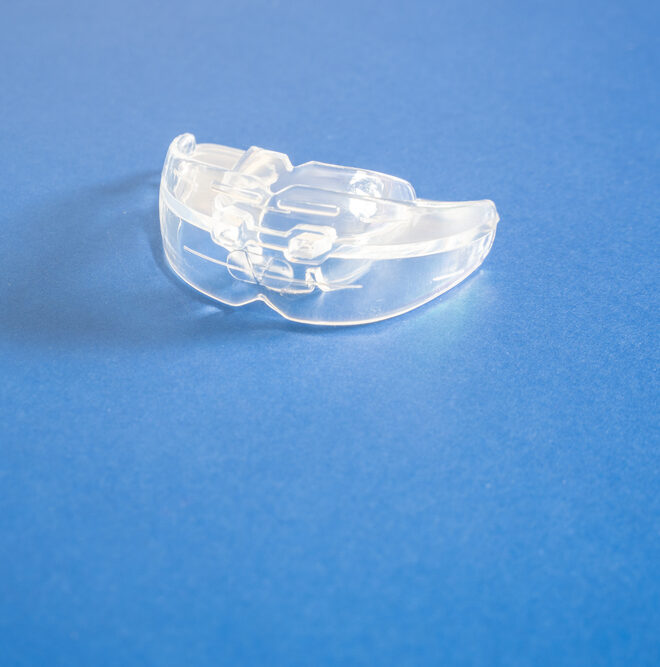
What is TAP Oral Appliance Treatment?
TAP oral appliance treatment is a clinically proven solution designed to address obstructive sleep apnea, a serious sleep disorder, and related issues. TAP treatment promotes proper airway management for better sleep, using a mandibular advancement device known as the TAP. The TAP (Thornton Adjustable Positioner), also called the TAP dental device, is a custom-made oral appliance used to treat obstructive sleep apnea and snoring. It consists of two trays, one for the upper teeth and one for the lower teeth, which are connected by a hook. This design allows the patient to adjust their lower jaw position, moving it slightly forward to keep the airway open during sleep. By repositioning the lower jaw, TAP dental devices prevent the collapse of soft tissues at the back of the mouth and throat. This effectively reduces nighttime snoring and obstructive sleep apnea symptoms while improving airflow, leading to more restful and uninterrupted sleep.
Benefits of TAP Oral Appliance Treatment
- Comfort: TAP appliances are custom-fitted to keep the jaw in a comfortable and effective position for treating the most common symptoms of sleep apnea. This offers an agreeable alternative sleep apnea treatment to the often cumbersome CPAP machines.
- Effectiveness: TAP mandibular advancement appliances effectively reduce obstructive sleep apnea symptoms, including snoring and interruptions in breathing, leading to improved sleep quality and reduced daytime sleepiness.
- Convenience: TAP mandibular advancement devices are easy to use and maintain, requiring no electricity or external equipment.
- Portability: TAP devices’ small size makes them ideal for travel, allowing you to maintain your oral appliance therapy regimen on the go.
- Improved Health: By addressing obstructive sleep apnea, TAP oral appliances can contribute to better overall health, reducing the risks associated with untreated sleep disorders.
Who Qualifies for TAP OSA Treatment?
- Sleep Apnea Severity: TAP mandibular advancement device treatment is generally recommended for individuals with mild to moderate obstructive sleep apnea (OSA) or those who experience disruptive snoring. For severe OSA cases, other treatment options, such as continuous positive airway pressure (CPAP) therapy, bilevel positive airway pressure (BiPAP) therapy, or more intensive interventions, are often considered more effective and appropriate.
- CPAP Comfort: If a patient finds continuous positive airway pressure (CPAP) therapy uncomfortable or struggles with compliance, the Thornton adjustable positioner may be considered as an alternative.
- CPAP Success: Patients who have tried CPAP therapy without success or cannot tolerate it may be candidates for TAP appliance treatment.
- Teeth and Jaw Health: The patient’s oral health, including the condition of their teeth and jaw, may impact their suitability for TAP treatment.
- Coexisting Conditions: Other medical conditions or factors, such as obesity, allergies, or nasal congestion, may impact the effectiveness of TAP therapy and should be considered.
- Anatomical Features: The patient’s jaw and oral anatomy play a role. Their jaw structure should allow for proper adjustment and positioning of the TAP device.
The TAP Oral Appliance Treatment Process
Consultation
The patient and journey to better sleep begins with an initial consultation with Dr. Briglia, our West Chester sleep dentist. During the consultation, your dentist conducts an assessment. This evaluation includes a review of your medical history, an analysis of the severity of your obstructive sleep apnea, and an examination of your oral health.
Design and Customization
Following the assessment, custom-fitted TAP oral appliances are created based on dental impressions. These dental appliances are uniquely designed to fit your oral anatomy, ensuring both comfort and effectiveness in treating obstructive sleep apnea symptoms.
Fitting
Once the TAP device is ready, you’ll return for a fitting appointment. During this appointment, the device is adjusted to the optimal position, helping patients to keep the lower jaw forward and maintain an open airway during sleep.
Wear and Adjustment
We’ll instruct you on how to wear the TAP device during sleep. Regular follow-up appointments may be scheduled to assess progress with sleep medicine, make any necessary adjustments to the appliance, and address any concerns.
Compliance and Effectiveness
Patient compliance is essential for effective obstructive sleep apnea treatment, so you’re strongly encouraged to wear the TAP device as directed. We’ll monitor the effectiveness of the treatment through follow-up assessments and make adjustments as needed to optimize results.
Caring for Your TAP Oral Appliance
Caring for your TAP appliance is essential to ensure its longevity and maintain its effectiveness. Here are some guidelines on how to care for your TAP device:
- Daily Cleaning: After each use, rinse your TAP device with warm water to remove any saliva or debris. Use a soft toothbrush and mild, non-abrasive soap to gently clean the appliance. Avoid harsh or abrasive cleaners, which can damage the device.
- Regular Inspection: Periodically inspect your TAP device for any signs of wear, damage, or loose parts. If you notice any issues, contact your healthcare provider or dentist for necessary repairs or adjustments.
- Storage: When not in use, store your TAP appliance in its provided case or a clean, ventilated container to prevent contamination. Keep it out of direct sunlight and away from extreme temperatures.
- Keep Pets Away: Ensure your TAP appliance is stored in a location that pets cannot reach. Some animals are attracted to the scent of saliva and may chew on the device.
- Regular Check-ups: Attend follow-up appointments with Dr. Briglia as recommended to monitor the effectiveness of the treatment and make any necessary adjustments to the appliance.
- Oral Hygiene: Maintain good oral hygiene by brushing and flossing your teeth regularly to prevent the buildup of plaque and bacteria on your TAP device.
- Replacement: Over time, TAP appliances may show signs of wear. Follow the manufacturer’s guidelines for replacing components or the entire device as needed.
- Avoid Harsh Chemicals: Refrain from using strong or abrasive chemicals, such as bleach or alcohol, to clean the TAP device, as they can damage the materials.
Frequently Asked Questions
Is TAP therapy comfortable to wear during sleep?
TAP devices are custom-fitted for comfort and are generally considered more comfortable than CPAP machines. Many patients find them easy to adjust to.
Can I travel with my TAP oral appliance?
Yes, TAP appliances are compact and portable, making them ideal for travel. Be sure to carry your device in its case and follow airline regulations for medical equipment.
What if my TAP appliance becomes uncomfortable or doesn’t seem to work?
If you experience discomfort or if the device appears ineffective, consult your healthcare provider or dentist. They can make necessary adjustments or explore alternative solutions.
Is TAP oral appliance therapy covered by insurance?
Coverage for dental sleep medicine with TAP varies by insurance plan. Some plans may cover the cost of the TAP oral device for sleep apnea treatment. Contact your insurance provider to inquire about coverage details and requirements.
Call Briglia Dental Group for Your TAP Oral Appliance!
Experience the benefits of TAP appliance therapy and take the first step towards a better night’s rest. For a peaceful night’s sleep and personalized solutions to sleep-related breathing disorders, contact Briglia Dental Group at (610) 692-4440. Serving patients in West Chester and surrounding areas such as Chester Springs, Exton, Broomall, and Chadds Ford, PA.


